It can sound impossible. “If I don't know Spanish, how am I supposed to speak it?”
That's exactly where the difference is. From the first class we start communicating in Spanish, even if you're an absolute beginner. I adapt the Spanish to your level, help you understand what you hear, and give you what you need to answer.
And little by little, Spanish starts coming out more and more naturally.
Don't wait until you know Spanish to start speaking it. Start speaking to learn Spanish.
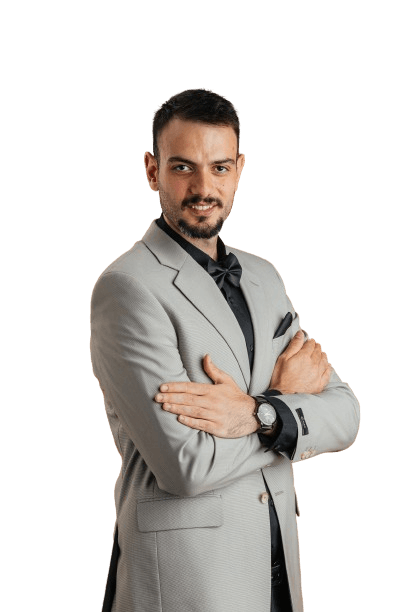
I'm a Spanish teacher, and I teach mainly through TPRS and Comprehensible Input. I speak four languages — Arabic, Spanish, Russian and English — and I lived in Russia for many years.
Learning languages myself taught me something important:
Knowing the rules of a language doesn't necessarily mean knowing how to use it.
That's why my classes are built around communication. For more than 7 years I've been helping people start speaking Spanish.
My goal isn't simply to teach you Spanish. I want to help you use it and enjoy it.
My full story →In my classes we don't spend most of the time memorizing vocabulary lists or doing mechanical drills. We work with comprehensible Spanish, stories, questions, conversation, reading and interactive activities.
Often we build a story together. I ask questions, you answer, and the situation grows. You don't just listen to the story — you're part of it. Sometimes you're one of the characters.
Different activities so you can use Spanish in many ways. We talk about your interests, experiences, opinions and real-life situations.
We use images to describe, imagine, compare and create conversations.
Texts adapted to your level, used to keep developing comprehension and vocabulary.
Important words and structures show up many times in different contexts. So you learn and use them without mechanical memorization.
You don't need all the rules, hundreds of words, or months of waiting. And you don't need to be afraid of mistakes.
TPRS stands for Teaching Proficiency through Reading and Storytelling. It's a method built on comprehension, stories, questions, interaction and meaningful repetition.
The idea is simple:
Instead of learning words and rules in isolation, you meet the language inside contexts you can understand.
The sentence is the curriculum. The conversation is the lab.
It all happens gradually and naturally. The goal isn't for you to be able to explain Spanish. The goal is for you to be able to use it.
You also get to choose which variety of Spanish you want to learn. You don't need to learn one variety first and switch later. Start directly with the Spanish you actually want to use.
We work with international Spanish and adapt vocabulary and ways of speaking to your goals.
See Spanish coursesIf Argentina or Uruguay is your thing, learn Rioplatense Spanish directly — including vos, and the vocabulary and expressions of the region.
See Rioplatense coursesLearn with me and other students in small groups of max 6 people.
Learn whenever you want, at your own pace, with my self-study materials.
“[Real testimonial 1 — add it in Testimonios]”
“[Real testimonial 2 — add it in Testimonios]”
“[Real testimonial 3 — add it in Testimonios]”
I've been on both sides of the desk. That's what shapes how I teach.
Tell me what you want to achieve with Spanish and what experience you have.
We get to know each other and you experience first-hand how my method works. Nothing to prepare.
Continue with a group course, private classes, or study on your own with my materials.
Yes. You can start from zero. From the first class we use Spanish adapted to your level and start communicating step by step.
Yes. Even as a beginner, you'll take part and produce Spanish from the very first class.
We don't base the classes on memorizing endless lists. Vocabulary shows up inside stories, conversations, readings and situations.
A method built on stories, questions, comprehension, interaction and meaningful repetition.
Yes. There are Rioplatense Spanish courses, and you can also work on this variety in private classes.
Mainly from beginner up to roughly B1/B2.
Yes. Groups have a maximum of 6 students.
Yes. There are video courses and self-study e-books. Explore self-study →